Advanced Pickleball Strategy: Reading Your Opponents
Learn to read opponents in pickleball by recognizing body language, anticipating shots, and exploiting weaknesses. Advanced tactics for competitive play.
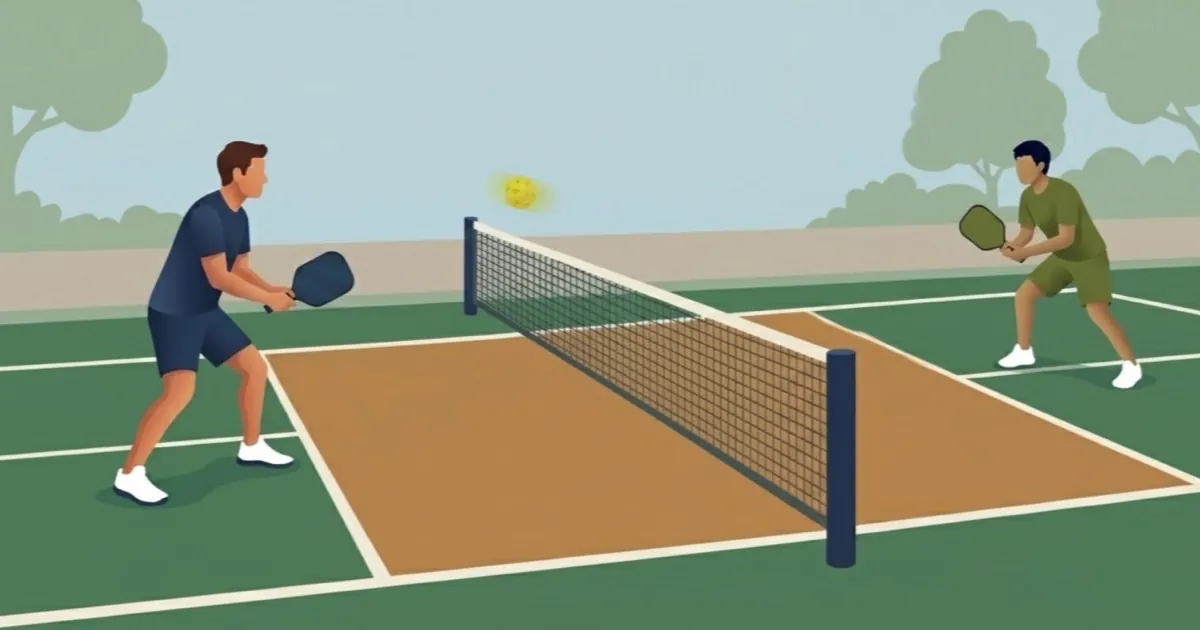
Advanced Pickleball Strategy: Reading Your Opponents
At the recreational level, pickleball is mostly about execution. Hit the ball in, avoid unforced errors, and you will win a lot of games. But as you climb into the 4.0+ range, execution alone is not enough. Everyone can dink, everyone can drive, and everyone has a reliable serve. What separates the best players from the rest is their ability to read the game and make smart decisions faster than their opponents.
Reading your opponents is a learnable skill. It is not some mystical talent that elite players are born with. It is pattern recognition developed through deliberate observation and practice.
The Foundation: Observing Before You React
Most intermediate players are reactive. The ball comes, they hit it back. Advanced players are proactive. They observe, anticipate, and position themselves before the ball even arrives.
Start building this habit by shifting your attention. Instead of watching only the ball, train yourself to watch your opponents. Specifically, watch their:
- Paddle face angle as they prepare to hit
- Body position relative to the ball
- Footwork and weight distribution
- Eyes and head orientation
- Shoulder rotation during the backswing
These cues happen in fractions of a second, but with practice you can learn to pick them up and respond before your opponent makes contact.
Reading Body Language Shot by Shot
Different shots produce different body language, and recognizing these patterns gives you a significant advantage.
The Dink
When an opponent is about to dink, watch for:
- A compact, low paddle position with minimal backswing
- Soft grip and relaxed wrist
- Weight shifting forward gently
- Eyes focused on the ball at contact point
If you see an opponent suddenly take a bigger backswing from the kitchen line or drop their paddle below the net, they are likely about to speed the ball up. That is your cue to prepare for a faster shot rather than another soft dink.
The Drive
A drive is telegraphed by:
- A longer backswing with the paddle drawn back past the hip
- Shoulder rotation opening up
- Weight transfer from back foot to front foot
- A slightly lower contact point than a drop or lob
When you see these cues from your opponent, get your paddle up in front of your body and shorten your reaction time by taking a small step back from the kitchen line.
The Lob
Lobs are often the easiest shot to read because they require a specific paddle motion:
- An open paddle face angling upward
- A scooping or lifting motion from below the ball
- The opponent’s eyes tracking upward briefly before contact
If you catch these signs, you can start turning your hips and preparing to move backward before the ball even leaves their paddle. This head start is often the difference between an overhead slam and a desperate scramble.
Anticipating Shots Through Pattern Recognition
Beyond individual body language cues, great players recognize patterns in how their opponents construct points. Most recreational and intermediate players have tendencies they do not even realize.
Common Patterns to Watch For
- Cross-court preference. Many players default to hitting cross-court, especially under pressure. If you notice this pattern, you can shade your positioning slightly and take away their favorite shot.
- Backhand avoidance. A large number of players will run around their backhand to hit a forehand whenever possible. Watch their footwork. If they consistently shift to cover the backhand side with their forehand, you know where the opening is.
- Speed-up timing. Most players speed up the ball at predictable moments. Some do it after three or four dinks. Some do it when the ball sits up slightly. Pay attention to when they attack, not just how.
- Return of serve tendencies. Does your opponent always return deep down the middle? Do they favor the cross-court angle? After two or three returns, you should have a read on their preferred target.
Building a Mental Scouting Report
During warm-up and the first few games, actively build a mental profile of each opponent:
- What is their strongest shot?
- What do they avoid?
- Where do they tend to hit under pressure?
- How do they respond to pace versus soft shots?
- Do they move well laterally? Forward and back?
This scouting report guides every strategic decision you make during the match.
Exploiting Weaknesses Without Being Predictable
Once you identify a weakness, the temptation is to hammer it relentlessly. This can work, but savvy opponents will adjust. The better approach is to use the weakness strategically while mixing in other looks to keep them guessing.
The 70/30 Rule
A good rule of thumb: target the weakness about 70% of the time and mix in other shots 30% of the time. This ratio keeps enough pressure on the weakness to generate errors while preventing your opponent from fully settling into a defensive pattern.
Exploit the Transition Zone
One of the most exploitable weaknesses at any level is movement through the transition zone, the area between the baseline and the kitchen line. Players are most vulnerable when they are moving forward. Hitting at their feet while they are in transition is one of the highest-percentage plays in pickleball.
Watch for opponents who:
- Rush to the kitchen without proper split-stepping
- Take long, lunging steps instead of short, controlled ones
- Arrive at the line off-balance or with their paddle down
These players are prime targets for a well-placed ball at their feet during the transition.
Attack the Middle
In doubles, the area between the two opponents is often the most effective target, and it becomes even more effective when you have read that one player tends to defer to the other. Watch the communication between your opponents. If one player consistently takes the middle ball, they may be leaving their side vulnerable. If neither player takes charge of the middle, that gap is your primary target.
Strategic Shot Selection
Reading your opponents is only valuable if it informs better shot selection. Here is how to translate your reads into points.
High-Percentage vs. Low-Percentage Shots
Every shot has a risk-reward profile. Advanced players choose shots based on the situation, not habit.
High-percentage situations for attacking:
- Opponent is leaning the wrong way
- Ball is above the net at the kitchen line
- Opponent is caught in the transition zone
- You have read their movement and have a clear opening
Situations to stay patient:
- Both opponents are set at the kitchen line with paddles up
- You are stretched wide or off-balance
- The ball is below net level
- You do not have a clear read on where your opponent is going
The discipline to stay patient when you do not have a clear advantage is what separates 4.0 players from 4.5+ players.
Using Deception
Once you can read your opponents, the next level is making yourself harder to read. Small adjustments make a big difference:
- Disguise your dinks. Use the same preparation for cross-court and straight-ahead dinks, changing direction with a subtle wrist adjustment at the last moment.
- Look one way, hit another. A brief glance to the left before hitting right can freeze your opponent for a split second.
- Vary your pace. If you have been driving the ball hard, a sudden soft drop catches opponents off guard. The contrast is what creates openings.
Adapting Your Strategy Mid-Match
The best game plan in the world is worthless if you cling to it when it is not working. Reading opponents is an ongoing process that continues throughout every match.
Check-In Points
Build the habit of assessing your strategy at natural break points:
- After the first game. What is working? What is not? Do you need to adjust your targets or pace?
- At side changes. Use the brief break to discuss adjustments with your partner.
- After losing two points in a row. This is an early warning sign. Do not wait until you have lost five straight to make a change.
Common Mid-Match Adjustments
- If your opponent has adjusted to your attacks, slow down and work more dink rallies
- If soft play is not working, increase the pace and move them laterally
- If one opponent has gotten hot, focus more attention on their partner
- If your stacking arrangement is not creating the matchups you want, switch formations
How Coach Pickle Helps You Think Strategically
Developing the ability to read opponents takes time and guided practice. Coach Pickle’s Mastermind coach personality is built specifically for players who want to sharpen the strategic side of their game. The Mastermind analyzes your play patterns, helps you identify tendencies in different opponent types, and coaches you through the decision-making process that turns observations into winning tactics.
Pairing strategic development with mental toughness training creates a complete competitive package. The players who combine strong reads with composure under pressure are the ones who consistently outperform their raw skill level.
Want Personalized Coaching?
Coach Pickle gives you an AI pickleball coach in your browser or on your phone. Get strategy advice, drills, and mental game coaching tailored to your skill level.