How to Disguise a Lob in Pickleball
Learn how to disguise an offensive pickleball lob by matching your dink setup, choosing the right ball, hiding common tells, and practicing a repeatable pattern.
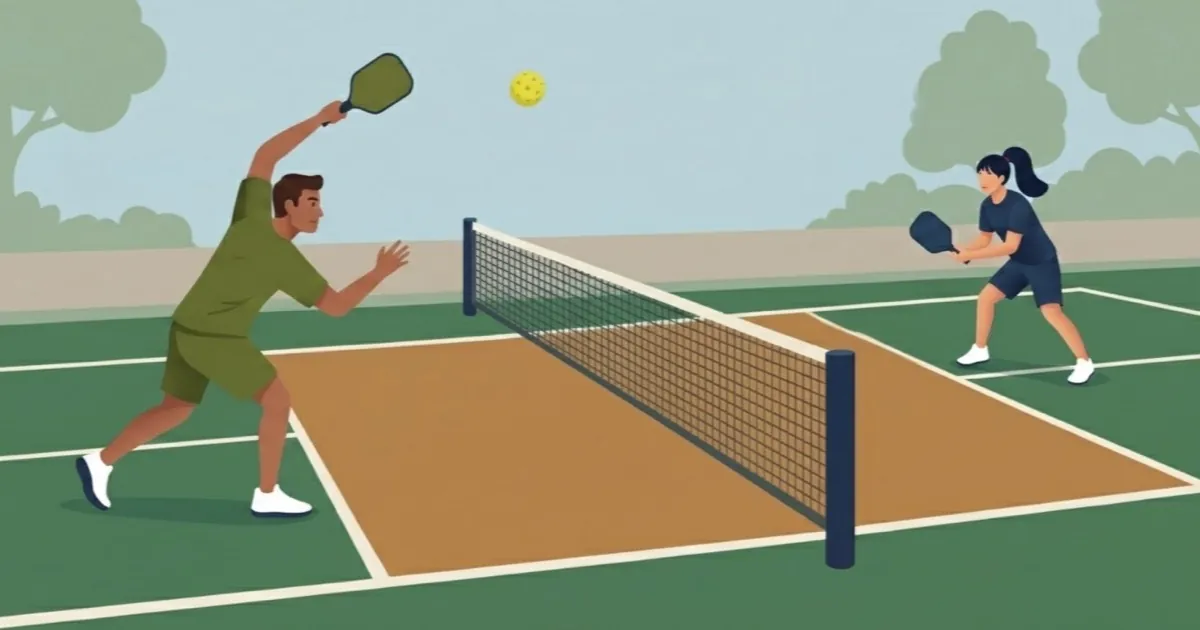
A good offensive lob is difficult to chase. A disguised offensive lob is difficult to read.
The difference is not a last-second wrist trick. Disguise comes from making your lob look like a dink for as long as possible: the same movement to the ball, the same body height, the same paddle preparation, and the same calm tempo.
When your opponent realizes you lobbed, the ball should already be climbing over their backhand shoulder.
First, Know Which Lob You Are Hiding
Pickleball has two broad types of lobs.
An offensive lob is hit from at or near the kitchen during a dink exchange. It travels high enough to clear an opponent’s reach but low enough to reduce their recovery time. This is the lob you disguise.
A defensive lob is hit when you are under pressure, often from the transition zone or baseline. Its main job is to create time and push opponents away from the kitchen. Height and depth matter more than disguise because the situation already tells your opponents you are defending.
Trying to disguise a desperate defensive lob usually makes it worse. Build disguise around the offensive lob from a balanced dink position.
What Makes a Lob Readable?
Most players announce the lob before they hit it. Common tells include:
- Standing taller as the ball approaches
- Opening the paddle face unusually early
- Taking a longer backswing than they use for a dink
- Dropping the paddle far below the ball
- Looking toward the baseline target
- Slowing down or pausing before contact
- Flicking the wrist in an obvious scooping motion
An alert opponent sees one of those changes and starts moving before the ball leaves your paddle. Your job is to remove the changes, not add a clever fake.
The Disguised Lob Technique
1. Arrive Like You Are Hitting a Dink
Move to the ball with small adjustment steps. Get balanced, bend your knees, and keep your head still. If your normal dink stance is compact and low, your lob stance should be compact and low too.
Late, reaching contact is a poor time to lob. You need enough balance to lift and direct the ball without a large rescue swing.
2. Use the Same Paddle Preparation
Set the paddle in front with a short backswing and a slightly open face, just as you would for a soft dink. Do not dramatically drop the paddle head or turn the face toward the sky.
The opponent reads preparation more than follow-through. Keep the preparation identical, then change the vertical finish after the forward motion has begun.
3. Keep Your Eyes and Chest Neutral
You do not need to stare down the opponent, but do not look early at the baseline. Keep your attention on the ball through contact and let your body stay oriented as it would for a crosscourt or middle dink.
Your target choice should happen before the ball arrives. Looking at the target during the swing gives away both the lob and its direction.
4. Lift With a Smooth, Late Extension
The swing begins like a dink: short, relaxed, and forward. Then extend the paddle upward through the back of the ball. Use your legs and shoulder to create the lift while keeping the wrist stable.
Think dink preparation, longer upward finish.
A last-second wrist flick is harder to control and easier to read than a smooth lift. It also tends to create a short lob that becomes an overhead.
5. Contact the Ball in Front
Contact should be in front of your body, ideally on a ball you can take after the bounce. If the ball gets behind you, you lose depth and directional control.
Use a relaxed grip so the ball stays on the paddle long enough to shape the arc. The motion should feel controlled, not explosive.
6. Clear Reach, Not the Building
An offensive lob should pass beyond the opponent’s highest comfortable reach and still land deep. Too low becomes an overhead. Too high gives the opponent time to turn, run, and set up.
The correct arc depends on your distance from the net, the opponent’s reach, and the conditions. Your target is not “as high as possible.” It is safely over and deeply in.
The Best Target: Over the Backhand Shoulder
For most players, the backhand shoulder is the more difficult place to take an overhead. A right-handed opponent generally prefers to move around a ball and strike it on the forehand side. A lob over the backhand shoulder makes that adjustment harder and can force a turn-and-run recovery.
Target the player who:
- Is leaning forward into the kitchen
- Has moved close to the net
- Is shorter or has limited overhead reach
- Is slow to turn and retreat
- Strongly favors a forehand overhead
In doubles, talk with your partner before using the lob. A successful lob can still produce a difficult return, and both of you must shift together to cover the next ball.
Choose the Right Ball to Lob
Disguise cannot rescue a bad selection.
Look for a dink that is:
- Slow enough for you to get balanced
- Bouncing in front of your body
- Not so low that you have to scoop it
- Near the middle or crosscourt lane you have already established
- Arriving while the target opponent is leaning forward or crowding the kitchen
Avoid lobbing when you are stretched wide, contacting behind your body, or fighting a strong wind. In those situations, continue the dink or reset the rally.
Build the Lob Inside a Pattern
The best disguise starts several shots before the lob.
Hit two or three dinks with the same preparation and trajectory family. Let the opponent become comfortable leaning toward that pattern. When a balanced ball arrives, repeat the setup and lift over the backhand shoulder.
A simple sequence is:
- Crosscourt dink to the opponent’s backhand
- Repeat the same crosscourt dink
- Show the same preparation
- Lob over that player’s backhand shoulder
Do not force the lob just because you reached the planned count. If the third ball is too low or pulls you off balance, dink again and wait.
Add a Little Topspin
Once the basic lob is reliable, a light topspin lob can make the ball dip toward the baseline after it clears the opponent.
Brush upward and slightly forward through the back of the ball with a stable paddle face. The goal is controlled shape, not maximum rotation. Too much wrist or acceleration makes depth unpredictable.
Learn the plain lifted lob first. Add topspin only when you can repeatedly clear the opponent and land the ball in the back few feet of the court.
Conditions That Change the Lob
Wind
Wind magnifies small errors. A tailwind can carry a perfect-looking lob long. A headwind can hold the ball up and give the opponent time for an overhead.
Test the conditions during warmup. In gusty wind, use the lob less often and choose larger targets. Disguise is irrelevant if the ball does not stay in the court.
Sun and Lights
Sun or overhead lights can make a high ball harder to track, but do not rely on unsafe or unsporting placement. Use the conditions as information, keep the lob in bounds, and be prepared for the ball to come back.
Opponent Position
The closer an opponent stands to the net, the less distance they have to react and retreat. That makes the lob tempting, but also raises the risk of an overhead if you leave it short. Wait until you are balanced and can create full depth.
Common Disguised Lob Mistakes
Changing Your Body Height
Standing up early is the clearest tell. Stay in your dink posture and create height through the swing path after preparation.
Using a Big Backswing
A large backswing announces the lob and hurts touch. Keep it as short as your dink backswing.
Lobbing From a Bad Ball
Players become committed to the idea and try it while reaching. Selection comes first. If the feed is poor, abort and dink.
Aiming Only “Up”
Height without depth produces an overhead. Picture a landing window near the baseline, not a spot above the opponent’s head.
Lobbing Too Often
The lob loses surprise when you use it every few rallies. One successful lob is enough to change an opponent’s posture and create more space for your dinks. Take the space even when you do not lob again.
Watching the Shot
Recover as soon as you finish. Move with your partner, prepare for an overhead or chase, and stay engaged until the rally ends.
The Dink-or-Lob Drill
You need a partner, a few balls, and two deep targets near the baseline.
- Both players begin at the kitchen and dink cooperatively.
- The hitter uses identical preparation on every ball.
- After at least three dinks, the hitter may dink again or lob.
- The defender calls “dink” or “lob” as soon as they read it.
- The lob scores one point if it clears the defender’s reach and lands in the back quarter of the court.
- The hitter loses one point if the defender calls “lob” before contact.
Play to ten, then switch roles. This drill measures both placement and disguise. A deep lob that everyone saw coming still needs work.
For a solo or ball-machine version, alternate three crosscourt dinks with one offensive lob. Record yourself from the opponent’s view. Watch only the preparation and pause before contact. If you can identify the lob early, find the tell and make the setup smaller.
The Real Value of a Disguised Lob
The lob does not have to win the point to help you. Once opponents know you can lift the ball over them, they may stop leaning so aggressively into the kitchen. That extra half-step creates room for your crosscourt dinks, middle attacks, and speedups.
Use the lob selectively, build it from the same preparation as your dink, and target depth over the backhand shoulder. The threat becomes valuable even when the paddle never turns upward.
Coach Pickle can help you add the offensive lob to a complete soft-game plan, choose progressions for touch and depth, and identify the situations where disguise creates a real tactical advantage.
Want Personalized Coaching?
Coach Pickle gives you an AI pickleball coach in your browser or on your phone. Get strategy advice, drills, and mental game coaching tailored to your skill level.