What Are Gen 4 Pickleball Paddles?
Learn how Gen 4 pickleball paddles are built, how full-foam cores differ from Gen 3 honeycomb designs, and which improvements players can expect.
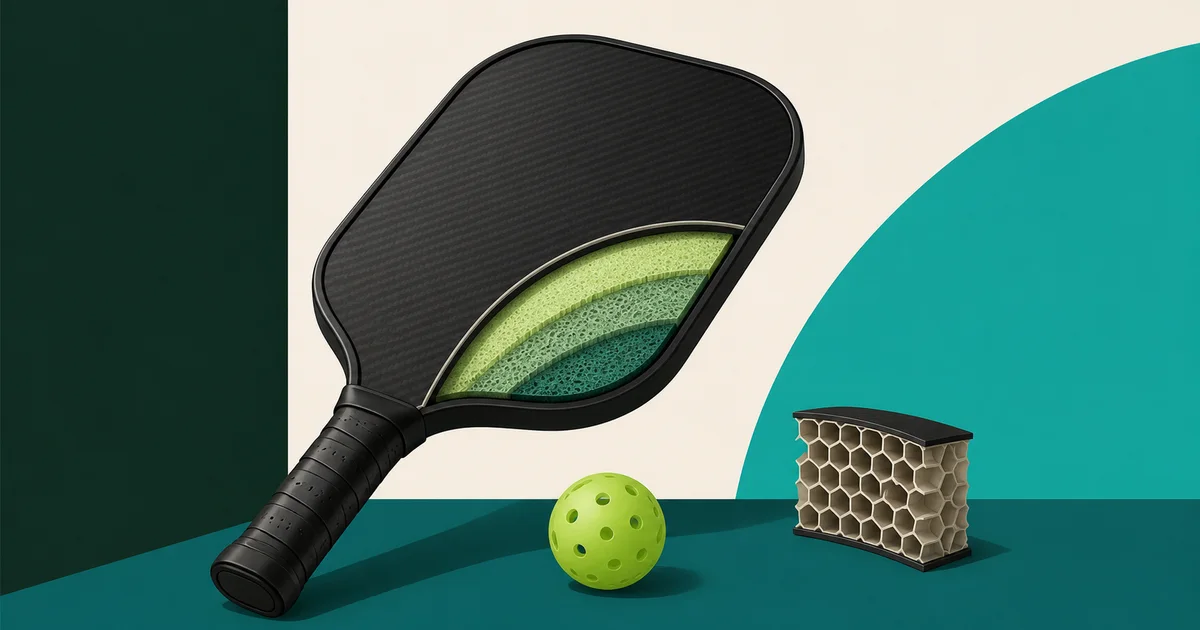
Pickleball paddle technology moves quickly, and Gen 4 is the latest term appearing in paddle descriptions and reviews. But what makes a paddle Gen 4, and how is it different from Gen 3?
The short answer is foam. Gen 4 paddles generally incorporate substantially more foam into the core, with many replacing the traditional polypropylene honeycomb entirely. The goal is to produce a paddle that feels more stable and forgiving while delivering dependable power, control, and durability.
How Gen 3 Paddles Are Built
Most Gen 3 paddles retain a polypropylene honeycomb core but add foam around it or between sections of the core. Manufacturers may use perimeter foam, internal foam channels, floating core sections, or multiple layers to create more energy return.
These designs can produce impressive power and pop. The surrounding foam also helps enlarge the sweet spot and reduce vibration compared with earlier thermoformed paddles.
However, the honeycomb remains an important part of the structure. Over time, its plastic cells can soften, compress, or separate from the paddle face. This is commonly called core crushing or delamination, although the construction quality—and therefore durability—varies considerably among manufacturers.
What Makes a Paddle Gen 4?
There is no universal industry definition of “Gen 4.” USA Pickleball approves individual paddle models based on its equipment standards; it does not classify them by generation. That means manufacturers sometimes use the term differently.
In its clearest form, Gen 4 refers to a paddle with a full or nearly full foam core rather than a primarily honeycomb core with foam added around it. For example, CRBN describes its TruFoam paddles as using a 100% foam core with no honeycomb. Other brands combine different foam densities or pair a central foam structure with a firmer perimeter ring.
A typical Gen 4 paddle may include:
- A solid EPP, EVA, or proprietary foam core
- Multiple foam densities for different performance characteristics
- A reinforced foam perimeter for stability
- Carbon-fiber or fiberglass face layers
- Thermoformed or compression-molded construction
- A carbon-fiber frame connecting the paddle head and handle
Because designs vary so widely, it is worth looking beyond the Gen 4 label and examining how a specific paddle is actually constructed.
Gen 4 Improvements Over Gen 3
More Consistent Response
Honeycomb is made from hundreds of individual cells. Foam can create a more continuous structure underneath the hitting surface, helping the paddle respond more consistently across a larger portion of the face.
That does not mean every shot will feel identical, but off-center contact may lose less stability and pace.
A Larger, More Forgiving Sweet Spot
By supporting the paddle face closer to its edges, full-foam and multi-density cores can expand the usable hitting area. This is especially helpful during quick exchanges, when perfectly centered contact is difficult.
Players may notice less twisting on mishits and more predictable resets from defensive positions.
Better Vibration Management
Foam naturally absorbs and distributes vibration differently from rigid honeycomb cells. Depending on the materials used, this can give Gen 4 paddles a quieter, more solid, or more muted feel.
Players who dislike the sharp feedback of powerful thermoformed paddles may find some foam-core models more comfortable. Feel still varies, however: certain Gen 4 paddles are soft and plush, while others are designed to be firm and explosive.
Potential Durability Benefits
Removing the honeycomb also removes one potential failure point. A full-foam paddle cannot suffer traditional honeycomb core crushing because there are no honeycomb cells to collapse.
That does not make a paddle indestructible. Face bonding, edge construction, foam quality, and manufacturing consistency still matter. Nevertheless, full-foam construction has the potential to maintain a more consistent structure over time.
More Ways to Tune Performance
Manufacturers can change foam density, placement, thickness, and shape to influence power, dwell time, stability, and balance. A softer central foam may improve control, while a firmer perimeter can add support and increase the sweet spot.
As a result, “Gen 4” does not describe one playing style. There are control-oriented, all-court, and power-focused Gen 4 paddles.
Is a Gen 4 Paddle Automatically Better?
Not necessarily.
A well-designed Gen 3 paddle may suit your game better than a Gen 4 model. Players who love a crisp, explosive response may prefer the pop of a foam-enhanced honeycomb core. Others may favor the stability, connected feel, and forgiveness of full foam.
When comparing paddles, consider:
- Core construction and thickness
- Static weight and balance
- Swing weight and twist weight
- Face material and surface texture
- Handle length and grip size
- Power, pop, control, and overall feel
- Approval status for the events you play
Tournament players should always confirm that the exact model appears on the relevant approved-paddle list. A Gen 4 label by itself does not guarantee tournament eligibility. USA Pickleball maintains a searchable approved paddle database.
The Bottom Line
Gen 3 paddles introduced creative ways to combine honeycomb and foam for more power and a larger sweet spot. Gen 4 pushes that idea further by making foam a central structural component—and, in many paddles, eliminating honeycomb altogether.
The result can be a more stable, forgiving, and consistent paddle with improved vibration control and the potential for better long-term durability. Just remember that “Gen 4” is a broad marketing category, not a universal construction standard.
Ready to compare the latest options? Explore these tested and ranked Gen 4 pickleball paddles to find a shape, weight, and performance profile that fits your game.
If you are still deciding which specifications matter most, start with our complete guide to choosing a pickleball paddle.
Want Personalized Coaching?
Coach Pickle gives you an AI pickleball coach in your browser or on your phone. Get strategy advice, drills, and mental game coaching tailored to your skill level.