What is the Kitchen in Pickleball? The Non-Volley Zone Explained
Learn what the kitchen is in pickleball, where it is on the court, what you can and cannot do there, and strategies for mastering the non-volley zone.
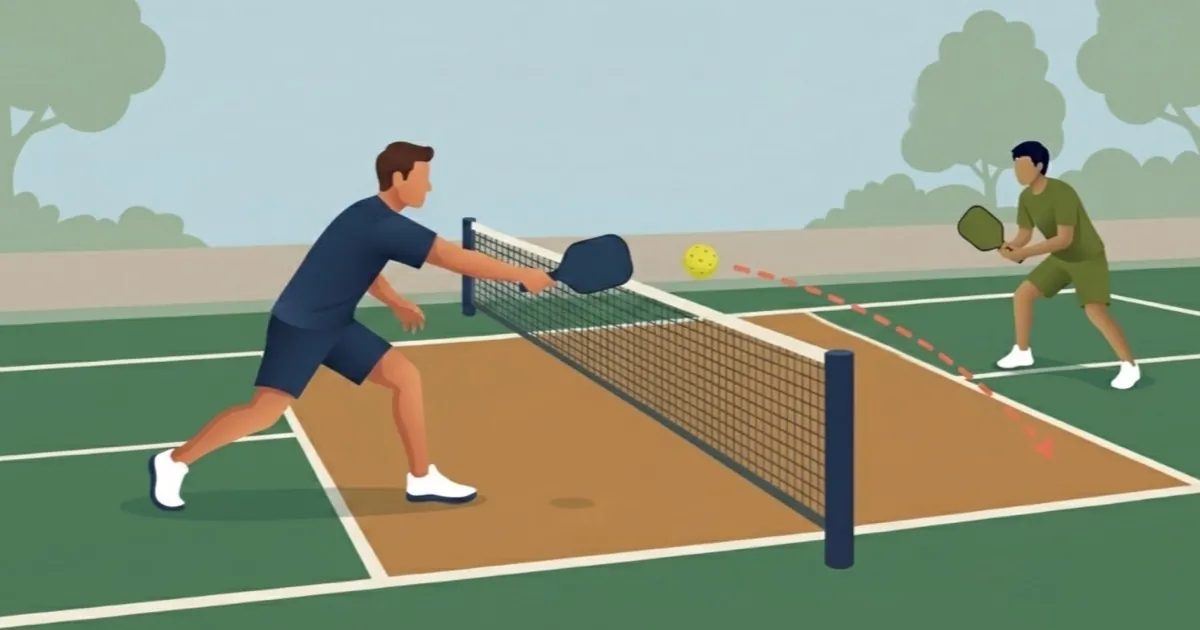
If you have played pickleball for more than five minutes, someone has probably yelled “kitchen!” at you. The kitchen is the most talked-about area on a pickleball court, and understanding it is essential to playing the game correctly. It is also the zone where most points are won and lost at every level of play.
In this guide, we will cover exactly what the kitchen is, where it sits on the court, what you can and cannot do there, the most common misconceptions, and how to use the kitchen to your strategic advantage.
What Is the Kitchen?
The kitchen is the informal name for the non-volley zone (NVZ). It is a 7-foot deep area on each side of the net that extends from sideline to sideline. The kitchen includes the kitchen line itself, which runs parallel to the net at 7 feet.
The official term in the USA Pickleball rulebook is “non-volley zone,” but virtually everyone calls it the kitchen. The name likely comes from shuffleboard, where the kitchen is a scoring zone you want to avoid, though the exact origin is debated.
Where Is the Kitchen on the Court?
Looking at the court from above:
- The net runs across the center of the 44-foot court
- On each side of the net, the first 7 feet is the kitchen
- The kitchen extends the full 20-foot width of the court
- The kitchen line marks the back boundary of the kitchen and is part of the kitchen
- Behind the kitchen line is where the service courts begin
The kitchen exists on both sides of the net, so each team has their own non-volley zone to worry about.
What You Cannot Do in the Kitchen
The core rule is simple: you cannot hit a volley while in the kitchen or while touching the kitchen line. A volley is any shot where you hit the ball before it bounces.
Here is a detailed breakdown of what constitutes a kitchen violation:
During a Volley
- Feet in the kitchen - If any part of your foot is on or inside the kitchen line when you volley the ball, it is a fault
- Touching the kitchen line - The line is part of the kitchen. Even a toe on the line during a volley is a fault
- Momentum carrying you in - If you volley the ball from behind the kitchen line but your forward momentum then carries you into the kitchen, it is a fault. This applies even after the ball is dead. You must establish balance outside the kitchen after every volley.
- Anything you are wearing or carrying - If your hat, sunglasses, paddle, or any other item falls into the kitchen during or after a volley, it is a fault
- Your partner touching the kitchen - If you are volleying and your partner is touching you while they are in the kitchen, it is a fault. The kitchen violation extends through physical contact.
The Momentum Rule in Detail
The momentum rule is the source of most kitchen arguments. Here is how it works:
- You stand behind the kitchen line and volley the ball
- Your forward swing and body movement carry you forward
- You step into the kitchen after the volley
- This is a fault, even though you were outside the kitchen at the moment of contact
To avoid momentum faults, practice volleying with a stable base. Bend your knees, keep your weight centered, and use a compact punching motion rather than a big swinging motion that pulls you forward.
What You Can Do in the Kitchen
This is where the misconceptions start. Many new players think the kitchen is off-limits entirely, like some kind of forbidden zone. That is not true at all.
Perfectly Legal Kitchen Actions
- Stand in the kitchen whenever you want - There is no rule against standing in the kitchen. You can camp out there all day if you like. You just cannot volley while you are there.
- Hit a ball that has bounced in the kitchen - If the ball bounces in the kitchen, you can step in and hit it. This is a groundstroke, not a volley, so the NVZ rule does not apply.
- Enter the kitchen between rallies - You can walk through the kitchen at any time. Just make sure you have re-established yourself outside the kitchen before volleying.
- Hit the ball from above the kitchen while standing outside it - Your paddle can extend over the kitchen line as long as your body and feet are behind it. The rule is about where you are standing, not where your paddle is.
Common Kitchen Misconceptions
Myth 1: You Cannot Step in the Kitchen at All
False. You can be in the kitchen anytime. The only restriction is on volleying while there. Stand in the kitchen, walk through it, have a conversation in it. Just do not volley from it.
Myth 2: The Ball Cannot Land in the Kitchen
False. The ball can land in the kitchen on any shot except the serve. In fact, dropping the ball into the kitchen (a dink) is one of the most common and effective shots in the game.
Myth 3: You Have to Let the Ball Bounce if You Are in the Kitchen
True, but misleading. If you are standing in the kitchen and a ball comes at you, you cannot volley it. You either need to let it bounce first (then you can hit it) or step out of the kitchen before hitting it out of the air. Many players stay just behind the kitchen line so they have the option to volley or step in for a bounce.
Myth 4: You Can Jump from Outside the Kitchen and Volley While in the Air Above It
This one is technically legal but tricky. If you jump from behind the kitchen line, volley the ball while airborne over the kitchen, and land outside the kitchen (for example, to the side), it is legal. However, if you land in the kitchen, it is a fault. This is sometimes called an “Erne” when executed to the side of the court, and it is an advanced move that beginners should not worry about yet.
Myth 5: After a Volley, You Just Need to Touch Outside the Kitchen
False. You must fully re-establish yourself outside the kitchen after a volley. This means both feet are on the ground outside the kitchen and you are balanced. Simply tapping a foot behind the line while falling forward into the kitchen does not count.
Kitchen Violations and How They Are Called
In recreational play, kitchen violations are called on the honor system. If you commit a kitchen fault, you should call it on yourself. If you see an opponent commit one, you can call it, but give the benefit of the doubt on close calls.
In tournament play, a referee may be present to make kitchen calls, or players may call faults on their opponents. Deliberate or repeated violations can lead to warnings or penalties.
Common Violations You Will See
- The toe drag - A player volleys the ball but drags their back foot into the kitchen
- The lean - A player leans forward over the kitchen to volley, and their momentum pulls them across the line
- The hat drop - A player’s hat or accessory falls into the kitchen during a volley
- The partner touch - One player is in the kitchen and touches their partner who is volleying
Kitchen Strategy for Beginners
Understanding the kitchen rules is step one. Using the kitchen to your advantage is step two.
Position Yourself Just Behind the Kitchen Line
The most powerful position on the court is standing about 1 to 2 inches behind the kitchen line. From here, you can volley balls hit at you, step in to play dinks that bounce, and reach balls on either side. This is where you want to be for most of the rally.
Use the Dink to Control the Point
A dink is a soft shot that lands in your opponent’s kitchen. Because they cannot volley it, they have to let it bounce and hit it upward, giving you a ball you can potentially attack. The dink is the weapon of choice at the kitchen line. Learn more about this critical shot in our dinking strategy guide.
Force Your Opponent into Kitchen Violations
Hit low, soft shots at your opponent’s feet when they are at the kitchen line. This forces them to hit upward, giving you attackable balls, or tempts them to volley while they are too close to the kitchen. Many points at the recreational level are won because a player instinctively volleys a ball while their foot is on the kitchen line.
Reset the Point with a Kitchen Drop
When you are under pressure at the baseline, a soft drop shot into the kitchen gives you time to move forward and resets the rally to neutral. The third shot drop into the kitchen is one of the most fundamental plays in the game, as covered in our beginner drills guide.
For a full overview of how the kitchen rule fits into the broader set of pickleball regulations, visit our rules guide for beginners.
Master the Kitchen with Coach Pickle
The kitchen is where pickleball games are won and lost, and understanding its rules is just the beginning. Coach Pickle’s AI coaches can help you develop soft hands for dinking, teach you positioning at the kitchen line, and run you through scenarios so kitchen play becomes instinctive. Whether you are working on avoiding momentum faults or learning to hit consistent drops, Coach Pickle provides the feedback you need to improve.

Want Personalized Coaching?
Coach Pickle gives you an AI pickleball coach in your browser or on your phone. Get strategy advice, drills, and mental game coaching tailored to your skill level.