How to Lob from the Kitchen Line: Technique and Timing
Learn when to use an offensive lob during a kitchen-line rally, how to clear an opponent's reach and land deep, and what to do after the shot.
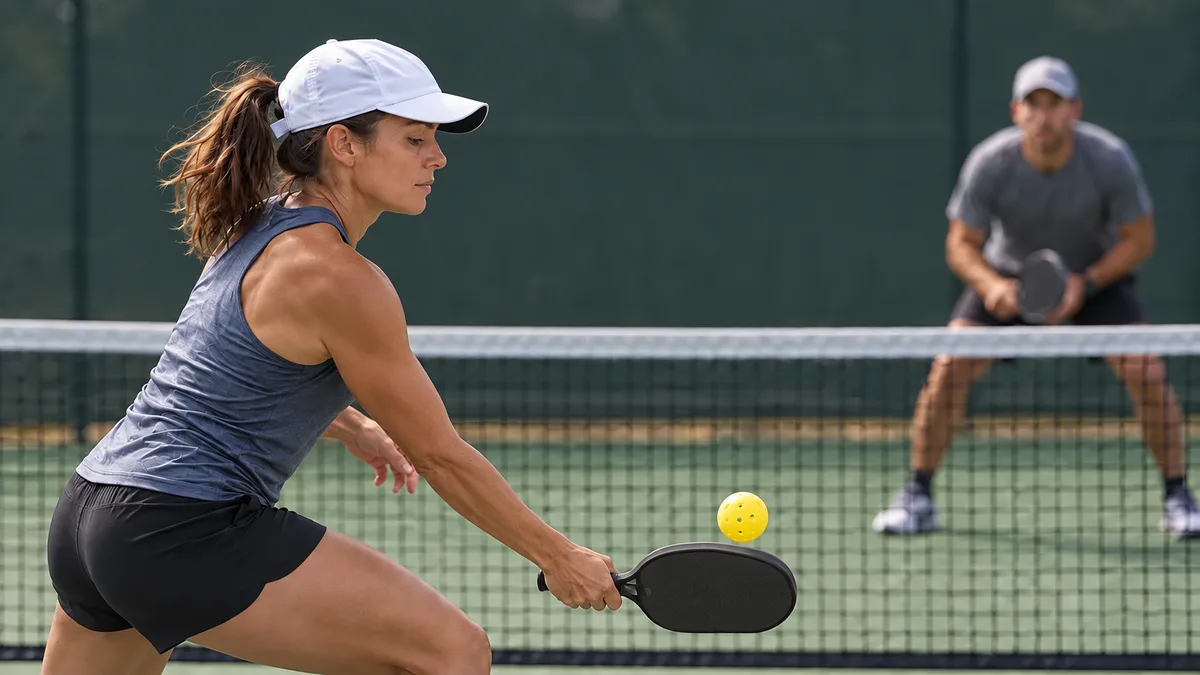
A lob from the kitchen line can turn a patient dink rally into a scramble. The shot works when your opponents are leaning toward the net, you have time to set your feet, and you can send the ball beyond their reach without sailing past the baseline. If any of those pieces is missing, another dink is usually the better choice.
This is an offensive lob: a planned change of height from a controlled position. It differs from a high defensive lob you hit to buy time while under pressure. USA Pickleball describes the offensive lob as most effective when opponents are at the non-volley-zone line expecting a dink or drive.
When is the right opportunity?
Look at the ball coming to you and the opponents across the net. A good opening has three parts:
- You are balanced. The incoming dink is slow enough to let you get behind the ball. You are not lunging wide or reaching behind your body.
- They are committed forward. One or both opponents are close to the kitchen line and leaning in to cover another dink. The Pickler calls this “lob when they lean.”
- There is room behind them. You can clear the target player’s overhead reach and land the ball deep inside the baseline.
A repeated crosscourt dink exchange often creates that opening. After two or three similar dinks, watch for an opponent to creep forward. If the next ball sits comfortably in front of you, lift the lob. The count does not matter; the quality of the ball does.
Avoid the lob when the ball is low and pulling you off balance, an opponent is already a step back and ready for an overhead, or wind is making depth unpredictable. A short lob gives away an overhead; a long lob gives away the point. The landing window is smaller than it looks from the kitchen line.
How to hit the kitchen-line lob
Start with your normal dink setup. Make small adjustment steps, bend your knees, and keep the paddle in front. Use a compact backswing. A big windup alerts the opponent and makes touch harder.
Let a comfortable ball bounce when you can. Contact it in front of your body while you are stable. You can lob a volley from behind the kitchen line, but a relaxed ball after the bounce is an easier place to learn the shot. Remember that you cannot volley while touching the non-volley zone or its line; the kitchen rules apply to a lob just as they do to any other volley.
Lift smoothly, then finish toward the target. Open the paddle face slightly and move through the back and lower half of the ball with your legs and shoulder helping the upward motion. Keep your wrist reasonably quiet. Think of a dink setup with a longer upward finish, not a hard scoop or a last-second slap.
Give the ball enough height to clear a real person. Your target is just beyond the opponent’s comfortable overhead reach, with the bounce in the back part of the court. A lower arc gives less chase time, but only if it clears them safely. Err toward clearance while learning; increase pace and flatten the arc after your depth becomes reliable.
Where should you aim? A deep lob over an opponent’s backhand shoulder often makes an overhead more awkward. In doubles, favor the player who is leaning in or has shown difficulty turning to retrieve a lob. Aim with margin inside the baseline and sideline rather than trying to paint a corner.
What to do after contact
Do not admire the shot. Recover to a ready position and read the opponent’s response. If they can hit an overhead, stay prepared to defend it. If they turn and let the ball bounce, move with your partner and protect the open court. The lob’s value may be the weak return it creates, even if it does not win outright.
Tell your partner before the match that you may lob during dink exchanges. A simple “lob” call as you hit helps both of you react together. If an opponent surprises you with a lob, turn and run to retrieve it rather than backpedaling, as USA Pickleball advises.
A drill for timing and depth
Put two visible targets a few feet inside the far baseline. Start a cooperative dink rally with a partner at each kitchen line. After at least three dinks, the hitter may dink again or lob. The lob earns a point only if it clears the defender’s reach and lands near a target. A short ball that the defender can overhead earns no point, even if it lands in.
Switch roles after ten attempts. Track how often the lob is clear and deep, not merely in bounds. Once that improves, let the defender move normally and play out the point. That reveals whether your recovery after the lob is ready for match play.
The simplest match cue is balanced ball, forward-leaning opponent, deep landing window. When all three are there, the kitchen-line lob can take control of the rally. When they are not, keep dinking and wait for a better ball. For more on hiding the shot within your dink motion, read our guide to disguising a lob.
Want Personalized Coaching?
Coach Pickle gives you an AI pickleball coach in your browser or on your phone. Get strategy advice, drills, and mental game coaching tailored to your skill level.