How to Play Pickleball: A Complete Beginner's Guide
Learn how to play pickleball from scratch. This beginner's guide covers equipment, court layout, rules, serving, scoring, and basic strategy.
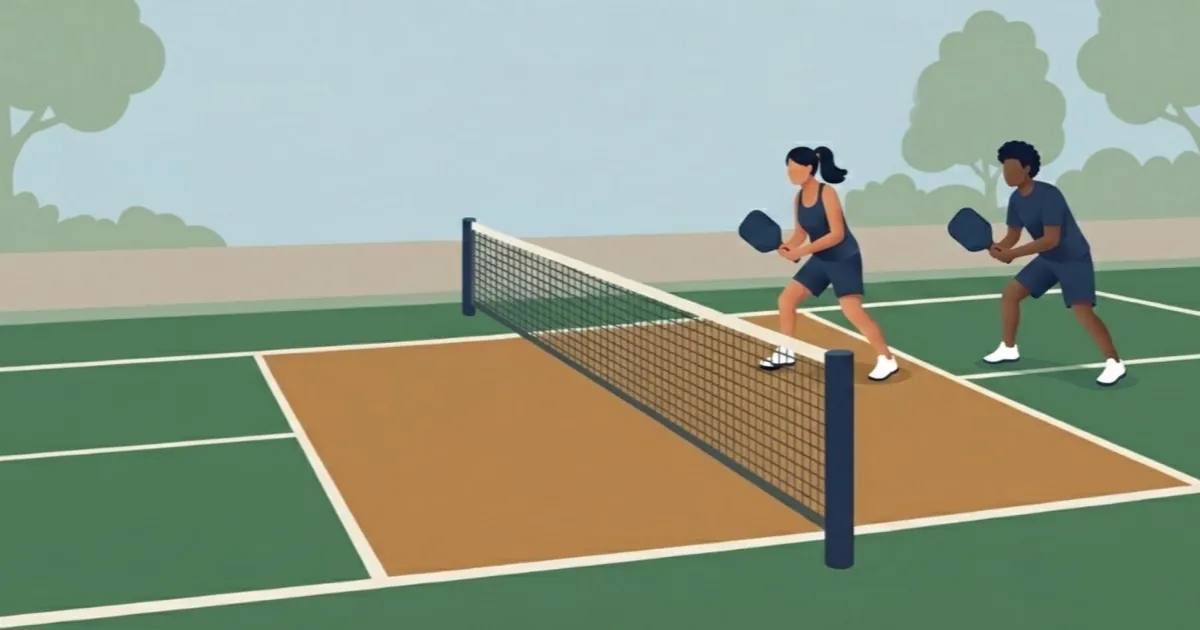
Pickleball is the fastest-growing sport in America, and for good reason. It combines elements of tennis, badminton, and ping-pong into a game that is easy to learn, social by nature, and a genuinely great workout. Whether you have been curious about the sport or someone just invited you to play this weekend, this guide will walk you through everything you need to know to step onto the court with confidence.
What You Need to Get Started
One of the best things about pickleball is the low barrier to entry. Here is what you need:
- A pickleball paddle - Paddles are solid (no strings) and come in various materials. Beginners can start with a basic composite or graphite paddle in the $30 to $60 range. Check out our paddle buying guide for more details.
- Pickleballs - These are plastic balls with holes, similar to wiffle balls. Outdoor balls have 40 smaller holes and are heavier, while indoor balls have 26 larger holes and are lighter.
- Court shoes - Any court shoe with good lateral support works. Avoid running shoes since they are designed for forward motion and can lead to ankle injuries during side-to-side movement.
- Comfortable athletic clothing - Nothing special required here. Wear what you would wear to play any racquet sport.
Many public parks and recreation centers now have dedicated pickleball courts with paddles and balls available to borrow, so you may not even need to buy anything to try the sport.
Understanding the Court Layout
A pickleball court is 20 feet wide and 44 feet long, which is the same size as a doubles badminton court. It is roughly a quarter the size of a tennis court, which means less running and more action.
The court is divided into several key areas:
- The baseline - The line at the back of the court where you serve from
- The sidelines - The lines running along each side
- The centerline - Divides each side into left and right service areas
- The non-volley zone (the kitchen) - A 7-foot zone on each side of the net where volleys are not allowed. This is one of the most important and unique features of pickleball. Learn more in our kitchen rules guide.
The net stands 36 inches high at the sidelines and 34 inches high at the center, slightly lower than a tennis net.
Basic Rules of Pickleball
Pickleball has a few essential rules that make it unique. Here is a quick overview:
The Double Bounce Rule
After the serve, each team must let the ball bounce once before hitting it. That means the returning team lets the serve bounce, and the serving team lets the return bounce. After these two bounces, players can volley the ball (hit it out of the air) or play it off the bounce.
The Non-Volley Zone
The kitchen is the 7-foot area on each side of the net. You cannot stand in this zone and hit the ball out of the air. You can enter the kitchen to play a ball that has bounced there, but you cannot volley while standing in or touching the kitchen line. For a deep dive into this rule, read our complete rules guide.
Serving Rules
- Serves must be made underhand with the paddle contacting the ball below your waist
- You serve diagonally to the opponent’s service area
- The serve must clear the net and land beyond the kitchen line
- Only one serve attempt is allowed (no second serves like in tennis)
How to Serve
The serve is your first shot in every rally, so getting comfortable with it matters. Here is how to execute a basic serve:
- Stand behind the baseline with both feet behind the line
- Hold the ball in your non-paddle hand in front of you
- Swing your paddle in an upward arc, contacting the ball below your waist
- Aim diagonally to the opposite service court
- Follow through toward your target
Keep your serve deep and consistent rather than trying to hit winners. A reliable deep serve that lands near the baseline puts pressure on your opponent without the risk of faults.
How Scoring Works
Scoring in pickleball can be confusing at first, but it follows a logical pattern once you understand it.
Key Scoring Facts
- Only the serving team can score points
- Games are typically played to 11, and you must win by 2
- In doubles, each player on a team gets to serve before the serve passes to the other team (except at the start of the game)
The Three-Number Score
In doubles, the score is called as three numbers: the serving team’s score, the receiving team’s score, and the server number (1 or 2). So “4-3-2” means the serving team has 4 points, the receiving team has 3, and the second server is serving.
The game always starts with a score of 0-0-2, meaning the first serving team only gets one server before the serve passes to the other side. For a much deeper explanation, check out our scoring guide.
Basic Strategy for Beginners
You do not need advanced strategy to enjoy pickleball, but a few principles will help you win more points right away:
Get to the Kitchen Line
The most advantageous position in pickleball is standing just behind the non-volley zone line. From here, you can hit volleys, play dinks, and put pressure on your opponents. After your team hits the third shot, work your way forward.
Keep the Ball Low Over the Net
High shots give your opponents easy opportunities to slam the ball. Focus on keeping your shots low, especially when you are near the kitchen. A soft, low shot is almost always better than a hard, high one.
Be Patient
Pickleball rewards patience more than power. Long rallies are common, and the team that makes fewer errors usually wins. Resist the urge to smash every ball. Instead, wait for a ball that sits up high and gives you a clear opportunity.
Communicate with Your Partner
In doubles, communication is everything. Call out “mine” or “yours” on every ball. Decide before the point who takes balls hit down the middle. Move together as a unit, staying roughly even with each other as you advance to or retreat from the net.
Return Serves Deep
When you are receiving the serve, aim your return deep toward the baseline. This keeps the serving team back and gives you and your partner time to move up to the kitchen line.
Common Beginner Mistakes to Avoid
- Standing in no-man’s land - Avoid lingering in the middle of the court between the baseline and the kitchen. You are either at the baseline or at the kitchen line.
- Hitting too hard - Power has its place, but control and placement win more points. Focus on getting the ball where your opponent is not rather than blasting it.
- Forgetting the double bounce rule - New players often run up and volley the return of serve. Remember, both the serve and the return must bounce.
- Ignoring the kitchen - The non-volley zone exists for a reason. Learn to use dinks and drops to win points at the net.
Pickleball Etiquette
Good etiquette makes the game more enjoyable for everyone:
- Call the score clearly before every serve
- Make honest line calls and give your opponent the benefit of the doubt on close calls
- Tap paddles with your opponents after each game as a sign of good sportsmanship
- If a ball from another court rolls onto yours, stop play and return it
- Be encouraging to new players and patient with those still learning the rules
Ready to Start Playing?
Pickleball is one of those rare sports where you can have a blast on your very first day while still having years of skill development ahead of you. Find a local court, grab a paddle, and give it a try.
Want personalized guidance as you learn the game? Coach Pickle’s AI coaches can analyze your play style, suggest drills tailored to your skill level, and help you build a solid foundation from day one. Whether you need help with your serve, your positioning, or understanding the rules, Coach Pickle is like having a private pickleball instructor in your pocket.
Want Personalized Coaching?
Coach Pickle gives you an AI pickleball coach in your browser or on your phone. Get strategy advice, drills, and mental game coaching tailored to your skill level.