Third Shot Drop vs. Third Shot Drive: Which Should You Hit?
Learn when to hit a third shot drop or third shot drive in pickleball, how to read the return, and how to build a reliable third-and-fifth-shot plan.
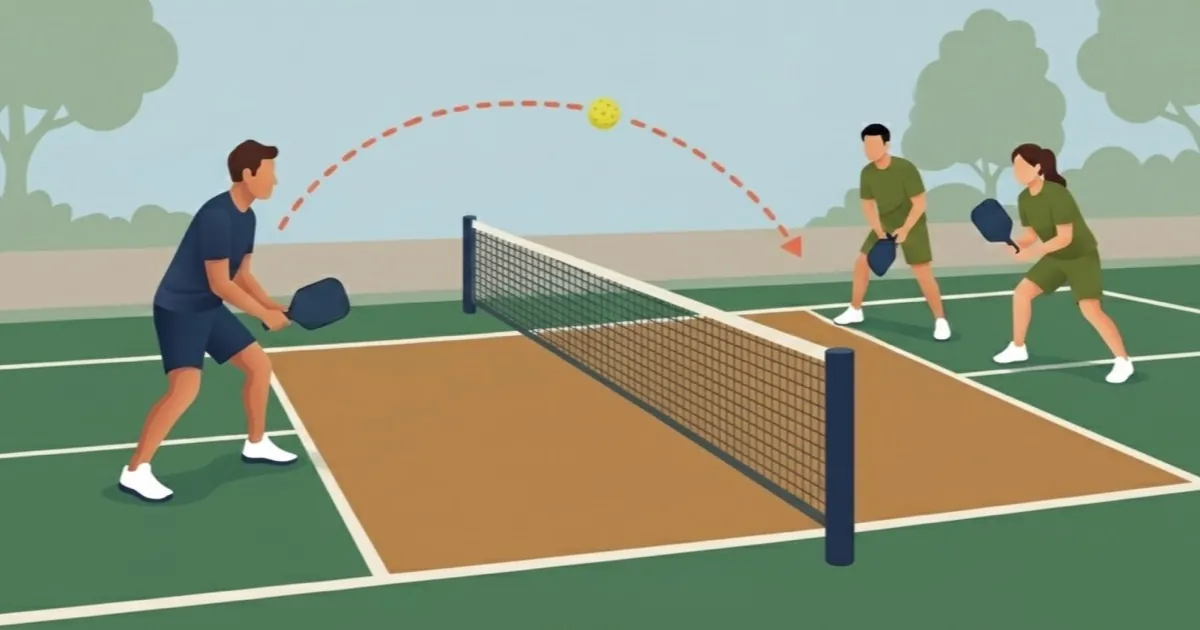
The third shot drop and third shot drive are not competing philosophies. They are two answers to the same problem.
After your team serves and the return bounces, the receiving team usually has the kitchen line while you are near the baseline. Your third shot has to help you escape that positional disadvantage.
A drop solves the problem with softness. A drive solves it with pace. The right choice depends on the return you receive, not the shot you decided to hit before the rally began.
The Quick Decision
| What you see | Better default | Why |
|---|---|---|
| Deep return that keeps you near or behind the baseline | Drop | A drive from deep gives prepared opponents time to block |
| Short return that sits waist-high | Drive | You can attack from inside the court and reduce reaction time |
| Both opponents set with paddles up at the kitchen | Drop | A soft ball makes them hit up instead of volleying down |
| One opponent still moving toward the kitchen | Drive | Pace at their feet tests their balance and preparation |
| Contact below your knees | Drop | It is difficult to drive low contact with pace and margin |
| Contact between waist and chest while balanced | Drive | This is the cleanest attacking height |
| You are stretched, late, or falling away | Safer reset/drop | A full drive from poor balance sprays errors |
This is a decision framework, not a commandment. Your strengths, your partner’s positioning, the score, and the opponents’ skills all matter. But if you learn to read depth, height, balance, and opponent position, the choice becomes much easier.
What the Third Shot Drop Is Trying to Do
A third shot drop is a soft, arcing shot intended to land in the opponent’s kitchen. A good drop descends below net height before the opponent can attack it.
The drop’s job is to:
- Make the opponent contact the ball low
- Buy time for you and your partner to move forward
- Neutralize the opponent’s advantage at the kitchen
- Start a dink or reset pattern instead of a power exchange
The drop is especially valuable against opponents with strong hands. If they can block hard drives all day, giving them less pace may be the better path to the kitchen.
Basic Drop Technique
- Use a relaxed grip, about 3 or 4 out of 10.
- Bend your knees and set the paddle below the ball.
- Keep the backswing short.
- Lift with a smooth low-to-high motion.
- Contact the ball in front of your body.
- Finish toward the target and move forward only as the quality of the shot allows.
Do not sprint through the transition zone just because you hit a drop. Move while the ball travels, split step as the opponent contacts it, and be ready to reset the next ball.
What the Third Shot Drive Is Trying to Do
A third shot drive is a firm groundstroke hit low over the net, usually with topspin. It is not simply “hit the ball as hard as possible.” A useful drive has shape, placement, and a plan for the next shot.
The drive’s job is to:
- Rush an opponent who is moving or poorly set
- Force a weak block or pop-up
- Attack a short return
- Create an easier fifth shot as you move through the transition zone
The best targets are usually the feet of a moving player, the middle seam, or the weaker backhand-side block. Driving directly into the sweet spot of a prepared paddle gives your opponent exactly what they want.
Basic Drive Technique
- Use a stable grip without squeezing at maximum pressure.
- Turn your shoulders and load from the ground.
- Contact a comfortable ball in front, ideally around waist height.
- Swing low to high and brush for topspin.
- Aim through a specific target, not generally “hard.”
- Recover forward under control and expect the ball to come back.
The drive is a setup shot far more often than a winner. If you admire it from the baseline, you waste the pressure it created.
Read the Return in Four Steps
The third-shot decision can happen quickly if you check the same four cues every time.
1. Depth
A deep return favors the drop because you are hitting from farther away. A short return favors the drive because you can step inside the baseline and take time away from the opponent.
Depth is your first and strongest cue.
2. Contact Height
Below-knee contact usually calls for softness. You have to lift the ball over the net, and trying to add heavy pace at the same time reduces your margin.
Waist-to-chest contact is the drive window. The ball is high enough to attack but low enough to shape with topspin.
3. Your Balance
Good drops and drives both require balance. If you are retreating, reaching, or jammed, shorten the swing and prioritize a neutral ball. A desperate full-power drive is not aggressive; it is low percentage.
4. Opponent Position
Two opponents planted at the kitchen with paddles ready can redirect a predictable drive at your feet. Make them reach down for a drop.
If one opponent is late, drifting, or split between the baseline and kitchen, drive at their feet. Movement makes a fast, low ball much harder to control.
Why “Always Drop” and “Always Drive” Both Fail
An always-drop player becomes predictable. Opponents can lean forward, crowd the kitchen, and look to take the ball early.
An always-drive player also becomes predictable. Opponents set their paddles, shorten their blocks, and use the incoming pace to pin the serving team back.
Variety matters, but random variety is not strategy. Mix shots for a reason:
- Drive a short return, then drop the fifth
- Drop deep returns until opponents begin leaning forward
- Show drive preparation and take pace off with a controlled drop
- Use a drive after an opponent starts moving before you strike
The goal is not a 50/50 split. The goal is to choose the shot the ball earns.
The Drive-Then-Drop Pattern
One of the most reliable combinations in modern pickleball is a third shot drive followed by a fifth shot drop.
- The return lands short or sits up.
- You drive low at the feet or middle seam.
- The opponent blocks the ball back.
- You move forward, stop in balance, and drop the fifth into the kitchen.
- You and your partner continue advancing behind the softer ball.
The drive creates a less comfortable volley. That volley often gives you a shorter, easier drop than the one you would have attempted from the baseline.
If the opponent pops the drive up, attack it. If they block firmly at your feet, reset. Your third shot choice begins a sequence; it does not finish your thinking.
How Your Partner Should React
Third-shot strategy is a team decision even when only one player hits the ball.
On a drop, both players should advance together according to the quality of the shot. A great drop may let you move several steps. A high drop may require you to stop and defend.
On a drive, the non-hitting partner can creep forward and look for a weak block, but should stay balanced and respect the opponent’s counterattack. At advanced levels, the partner may poach a predictable pop-up. That pattern works only when both players agree on it and practice the coverage behind it.
Never leave a large diagonal gap between partners. Move as a connected unit and split step before the opponents hit.
Common Decision Mistakes
Dropping a Short, High Return
You are giving up an attackable ball. Step forward and drive to a purposeful target unless the matchup strongly favors your soft game.
Driving a Deep, Low Return
You are trying to create pace from the worst geometry on the court. Use height and softness to earn your way forward.
Treating the Drive as a Winner
Expecting an outright winner leaves you flat-footed. Plan for the block and prepare the fifth shot.
Advancing Without Reading Shot Quality
Moving forward behind a ball that sits up invites an attack at your feet. Advance behind good shots, stop behind weak ones, and always split step before contact.
Changing Strategy After One Miss
One missed drop does not mean you should drive every ball. One drive into the net does not mean the drive was the wrong choice. Evaluate the decision and the execution separately.
A Drill That Teaches the Choice
Have a partner feed returns from the kitchen line while you begin near the baseline. The feeder varies depth and height without announcing it.
- Deep or low feed: hit a drop
- Short, waist-high feed: hit a drive
- Feed at a moving target: drive at the feet
- Feed with both defenders set: drop and advance
Play out each rally through the fifth shot. Award yourself one point for the correct decision and one point for successful execution. Tracking both prevents a good outcome from hiding a poor choice.
Which Shot Should You Practice More?
Practice the shot that limits your game, but do not neglect the other one.
If you can drive but cannot drop, opponents will eventually absorb your pace. Spend more time on touch, arc, and transition resets.
If you can drop but never threaten with pace, opponents can crowd the kitchen and attack your soft shots. Build a controlled topspin drive and learn two reliable targets.
A complete player can do both. A smart player knows when each one belongs.
Coach Pickle can help you diagnose your third-shot patterns, choose drills for the shot that needs work, and build a progression from baseline decisions to fifth-shot execution.
Want Personalized Coaching?
Coach Pickle gives you an AI pickleball coach in your browser or on your phone. Get strategy advice, drills, and mental game coaching tailored to your skill level.