Mastering the Third Shot Drop in Pickleball
Learn how to hit a consistent third shot drop in pickleball. Master the technique, avoid common mistakes, and use drills to level up your transition game.
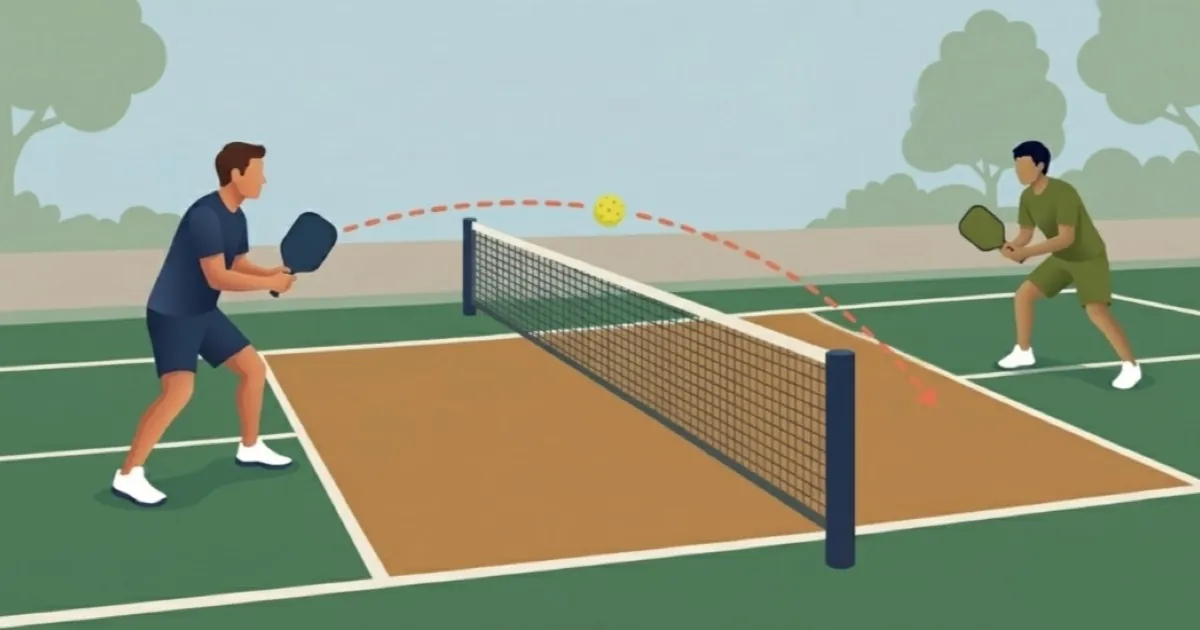
What Is the Third Shot Drop?
The third shot drop is one of the most important shots in pickleball, and learning it is the single biggest leap most intermediate players make. Here is the concept: after you serve (shot one) and your opponent returns the serve (shot two), your team hits a soft, arcing shot (shot three) that lands in or near the non-volley zone, also known as the kitchen.
The purpose of this shot is simple but crucial. It allows the serving team to transition from the baseline up to the kitchen line, where points are most often won. Without a reliable third shot drop, you are stuck at the back of the court while your opponents control the net.
Why the Third Shot Drop Matters
In pickleball, the team that controls the kitchen line has an enormous advantage. After serving, you and your partner are at the baseline while your opponents are already at the net. Driving the ball hard might feel powerful, but a well-positioned opponent will simply volley it back at your feet.
The third shot drop changes the dynamic by:
- Neutralizing your opponents’ net position by forcing them to hit up on the ball
- Buying you time to move forward toward the kitchen line
- Taking pace off the rally, which shifts the game into the soft game where strategy beats raw power
- Creating opportunities for your partner to advance as well
If you want to move beyond beginner-level play, the third shot drop is non-negotiable. It is the bridge between the baseline game and the net game.
Third Shot Drop Technique
Grip
Use a continental grip or a slightly relaxed eastern forehand grip. You do not want a tight, firm grip for this shot. Think of holding the paddle at about a 3 or 4 on a scale of 1 to 10. A loose grip absorbs energy and gives you the soft touch you need.
Paddle Angle
Your paddle face should be slightly open, angled upward at roughly 30 to 45 degrees. This angle is what creates the arc on the ball, sending it up and over the net before it drops down into the kitchen. Too flat and the ball sails long. Too open and you pop it up high enough for an easy putaway.
Body Position and Footwork
Good drops start from the ground up. Here is how to set yourself up:
- Get low. Bend your knees and drop your hips. Your paddle should start below the ball.
- Step into the shot. A small step forward with your front foot generates controlled forward momentum.
- Keep your weight moving forward. This is a transition shot, so your body should already be heading toward the kitchen.
- Contact the ball in front of your body. If you are reaching behind you or to the side, the drop becomes inconsistent.
The Swing
The swing itself is more of a lift than a hit. Think of it as pushing the ball upward with a smooth, controlled motion from low to high. There is very little backswing. Your arm should move from your hip area upward in a gentle arc, almost like you are scooping the ball over the net.
Key swing reminders:
- No wrist flick. Keep your wrist stable throughout the motion.
- Follow through toward your target. Your paddle should finish pointing where you want the ball to go.
- Use your legs. The power comes from your legs straightening, not from an arm swing.
Where to Aim Your Third Shot Drop
Not all drops are created equal. Placement matters as much as execution.
- Crosscourt drops are generally safer because you have more court to work with and the net is lower in the center. This is your default target.
- Down-the-line drops can catch opponents off guard but carry more risk because the net is higher at the sideline.
- Target the middle when both opponents are at the kitchen line. Dropping to the middle can cause confusion about who takes the ball.
The ideal drop lands within two feet of the net on the other side, forcing your opponent to hit up and giving you nothing attackable in return.
Common Third Shot Drop Mistakes
1. Hitting Too Hard
The most common mistake by far. Players try to “place” the ball instead of letting the arc do the work. If your drops are sailing long, you are swinging too hard. Focus on a softer touch and a higher arc.
2. Standing Too Upright
When you stand tall, you lose control of the drop. Get low and stay low through contact. Your knees should be bent, and your paddle should start below the ball.
3. Using Too Much Wrist
Flicking your wrist adds unpredictable spin and pace. Keep the wrist firm and let the shoulder and legs control the motion.
4. Not Moving Forward After the Drop
The whole point of the drop is to transition forward. Hitting a great drop and then standing at the baseline wastes the advantage you just created. Hit and move, every single time.
5. Dropping Every Third Shot
Sometimes a drop is the wrong choice. If you receive a short, high return of serve, a drive or a lob might be the better play. Reading the situation is part of mastering the third shot.
When NOT to Hit a Third Shot Drop
The third shot drop is not always the best option. Consider driving the ball instead when:
- The return of serve is short and high. This is an attackable ball. Driving it at your opponents’ feet can be more effective than a drop.
- The wind is strong in your face. Wind makes drops unpredictable. A low drive keeps the ball more controlled.
- Your opponents struggle with pace. If the team across from you cannot handle hard shots, a drive might earn more free points.
- You are confident in your drive-and-move game. Some players prefer a hybrid approach, driving the third shot low and advancing behind it.
The best intermediate players mix drops and drives to keep opponents guessing. If you hit the same shot every time, you become predictable.
Drills to Improve Your Third Shot Drop
Drill 1: Target Practice
Place targets (cones, towels, or water bottles) in the kitchen on the other side of the net. Stand at the baseline and practice dropping balls onto those targets. Start with 20 balls and track how many land in the kitchen.
Drill 2: Drop and Move
Have a partner at the net feeding you deep balls. Hit a third shot drop and then immediately move forward three or four steps. This trains the habit of transitioning after your drop. Your partner can call out “good” or “too high” to give you instant feedback.
Drill 3: Live Rally Drops
Play points where the serving team must hit a drop on their third shot, no drives allowed. This forces you to practice the drop under game-like pressure. After you are comfortable, allow the option to drive so you can practice choosing the right shot.
Drill 4: Wall Drops
Stand about 14 feet from a wall and practice soft drops that hit low on the wall and bounce gently back. This is a great solo drill for developing touch and feel without needing a partner.
Building Consistency Over Time
The third shot drop takes more practice than almost any other shot in pickleball. Do not expect to master it in a week. Here is a realistic progression:
- Week 1-2: Focus on the mechanics. Get the grip, paddle angle, and body position right. Do not worry about placement yet.
- Week 3-4: Start aiming for the kitchen consistently. Track your success rate.
- Month 2: Begin mixing drops and drives in drills and open play. Focus on reading when to drop versus when to drive.
- Month 3 and beyond: Refine placement, work on crosscourt versus down-the-line drops, and build confidence under pressure.
The key is repetition. The players who have the best drops are the ones who have hit thousands of them in practice.
Take Your Third Shot Drop to the Next Level
The third shot drop separates recreational players from competitive ones. It requires patience, soft hands, and a willingness to practice a shot that does not feel as satisfying as a hard drive. But once you have it, you will find yourself winning more points, controlling more rallies, and moving through the 10 tips that improve your overall game faster than you expected.
Want personalized feedback on your third shot drop? Coach Pickle’s AI coaches can analyze your technique, suggest drills tailored to your skill level, and help you build the consistency needed to make the drop a reliable weapon in your game.
The third shot drop is one of 58 step-by-step drills in the Coach Pickle drill library — alongside backhand third shot drops, transition zone drops, defensive drop resets, and the topspin roll drop, all organized by DUPR skill level. If you want a goal you can measure (“60% of drops land soft in the kitchen across 75 reps”) and a coach voice walking you through stance, contact, and follow-through, that’s where to start.
Want Personalized Coaching?
Coach Pickle gives you an AI pickleball coach in your browser or on your phone. Get strategy advice, drills, and mental game coaching tailored to your skill level.