10 Pickleball Tips to Instantly Improve Your Game
Boost your pickleball game with 10 actionable tips covering positioning, shot selection, and strategy. Practical advice for intermediate players.
Get Better at Pickleball Starting Today
You do not need to overhaul your entire game to see real improvement in pickleball. Sometimes a handful of focused adjustments can make a dramatic difference in how you play and how many games you win. These 10 tips are targeted at intermediate players who have the basics down but want to take the next step.
Each tip is something you can put into practice the next time you step on the court. No new equipment needed, no months of drilling required. Just smarter decisions and better habits.
1. Stay in the Ready Position Between Every Shot
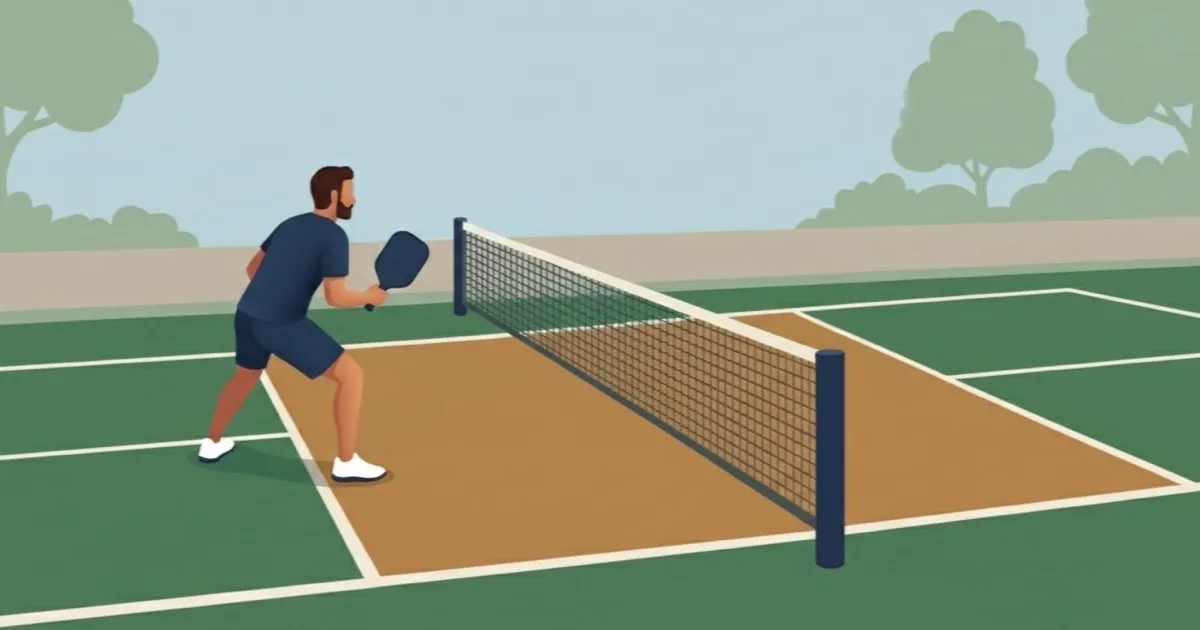
The ready position is your home base. Paddle up in front of your chest, knees slightly bent, weight on the balls of your feet, eyes forward. After every single shot, return to this position.
Most errors at the intermediate level happen because players are out of position when the ball arrives. They just hit a shot and their paddle is down at their side, or they are standing straight up, or they are turned sideways. By the time they react, it is too late.
Make the ready position automatic. Hit your shot, then immediately reset. It takes discipline, but it eliminates a surprising number of unforced errors.
2. Watch the Ball Hit Your Paddle
This sounds obvious, and every player thinks they do it. Most do not. The natural tendency is to look where you want the ball to go before you actually make contact. This leads to mishits, shots off the frame, and inconsistency.
Practice literally watching the ball contact your paddle face. Track it all the way in. You will notice an immediate improvement in the cleanness of your shots, especially on dinks and volleys at the kitchen line.
3. Get to the Kitchen Line as Fast as Possible
The team that controls the kitchen line wins the majority of rallies. This is not a suggestion or a general guideline. It is the fundamental strategic principle of doubles pickleball.
After you serve and your team hits a third shot drop, move forward. After you return serve, move forward. Any time the ball allows it, move forward. Your goal is to have both you and your partner standing with your toes near the kitchen line as much as possible.
If you find yourself hanging out at mid-court or the baseline, ask yourself why. Unless you are hitting a specific shot that requires it, you should be at the net.
4. Develop Your Soft Game
Power is fun. Slamming a ball past your opponent feels great. But as you face better competition, power alone stops working. Skilled players can block, reset, and counter hard shots all day long.
The soft game, including dinks, drops, and resets, is what separates intermediate players from advanced ones. Spend time developing touch on your:
- Dinks: Soft shots that land in the kitchen
- Third shot drops: Soft shots from the baseline that land in the kitchen
- Resets: Soft blocks that absorb pace and neutralize attacks
You do not have to abandon power entirely. The best players use a mix. But if your soft game is weak, better opponents will exploit it.
5. Serve Deep and With Purpose
A serve that lands near the baseline puts your opponent on their heels and gives you an advantage on the third shot. A serve that lands at mid-court gives your opponent a comfortable setup and control of the rally from the start.
Every serve should:
- Land deep, ideally within three feet of the baseline
- Have a consistent pre-serve routine so you are focused before each serve
- Target a weakness, such as your opponent’s backhand or a position that forces them to move
You do not need a fancy spin serve to be effective. A deep, consistent serve with good placement is more valuable than a flashy serve that goes into the net half the time. For more on this, check out our guide on pickleball serve techniques.
6. Return Serve Deep and Get to the Net
The return of serve is one of the most important shots in pickleball, and it is often treated as an afterthought. A deep return of serve pushes the serving team back, gives them a difficult third shot, and buys you time to get to the kitchen line.
After hitting your return, start moving forward immediately. You have the advantage because the serving team must let the return bounce (the two-bounce rule), so they cannot volley your return. Use that time to close in on the net.
Aim your return deep and toward the middle of the court or at the weaker player on the serving team. Avoid short returns that land at the service line, as these give the serving team an easy ball and a clear path forward.
7. Communicate With Your Partner
Doubles pickleball is a team sport. Poor communication costs more points than poor shot-making at the intermediate level. Here is what you and your partner should be doing:
- Call the ball. “Mine” or “yours” on every shot that could go to either player. Call it early and call it loud.
- Call “out” balls. If you see a ball heading out, shout it so your partner does not swing at it.
- Discuss strategy between points. Quick conversations like “I’m going to poach on the next one” or “serve to their backhand” keep you on the same page.
- Encourage each other. Positive energy matters. A quick “good shot” or “no worries” after an error keeps the team mindset strong.
The middle of the court is where most communication breakdowns happen. Establish a clear rule with your partner about who takes balls hit to the middle. A common approach is that the player with the forehand in the middle takes those balls.
8. Be Patient in Rallies
Impatience kills more points than lack of skill. The urge to end the rally with a big shot is strong, but forcing a winner from a bad position is a recipe for errors.
Good pickleball is about waiting for the right ball. Dink patiently. Work the point. Move your opponents around. When the opening appears, whether that is a high ball, an opponent off balance, or a gap in coverage, then attack.
If you find yourself losing rallies by trying to do too much, commit to one rule: do not attack unless the ball is above the net. If you are hitting up on the ball, stay patient and keep the rally going.
9. Move as a Unit With Your Partner
In doubles, you and your partner should move together like you are connected by an invisible rope about eight to ten feet long. When one of you shifts left, the other shifts left. When one moves forward, the other moves forward.
This keeps the court covered and eliminates the large gaps that opponents love to exploit. Common positioning mistakes include:
- One up, one back. This is the weakest formation in pickleball. Both players should be at the kitchen line or both should be back.
- Both players on the same side. If a ball pulls one of you wide, the other should shift toward the middle, not follow.
- Not matching depth. If your partner is at the kitchen line and you are at mid-court, your opponents will target you at your feet.
Think of it as a team position, not an individual one. Where your partner goes, you adjust accordingly.
10. Learn From Every Game
The fastest way to improve is to reflect on what happened after every session. Not a long, formal review, just a quick mental check:
- What shots gave me trouble today?
- What worked well that I should keep doing?
- Did I make the same mistake more than once?
- Was there a specific player or style that gave me problems?
Identifying patterns in your play helps you focus your practice time on the areas that matter most. A player who practices their weaknesses improves faster than a player who only drills what they are already good at.
Putting It All Together
These 10 tips are not complicated, but they are effective. The difference between a 3.0 player and a 3.5 player is often not about one dramatic skill. It is about doing the small things well, consistently. Ready position. Deep serves. Getting to the kitchen. Communicating with your partner. Being patient.
Pick two or three tips from this list and focus on them for your next few sessions. Once those become habits, come back and work on the next ones.
Want a personalized plan to improve your game faster? Coach Pickle’s AI coaches can assess your strengths and weaknesses, build custom practice plans, and give you the specific guidance you need to reach the next level of play.
Want Personalized Coaching?
Coach Pickle gives you an AI pickleball coach in your browser or on your phone. Get strategy advice, drills, and mental game coaching tailored to your skill level.