How to Beat Bangers in Pickleball
Learn proven strategies to beat bangers in pickleball. Master resets, positioning, and the soft game to neutralize hard hitters and win more games.
What Is a Banger in Pickleball?
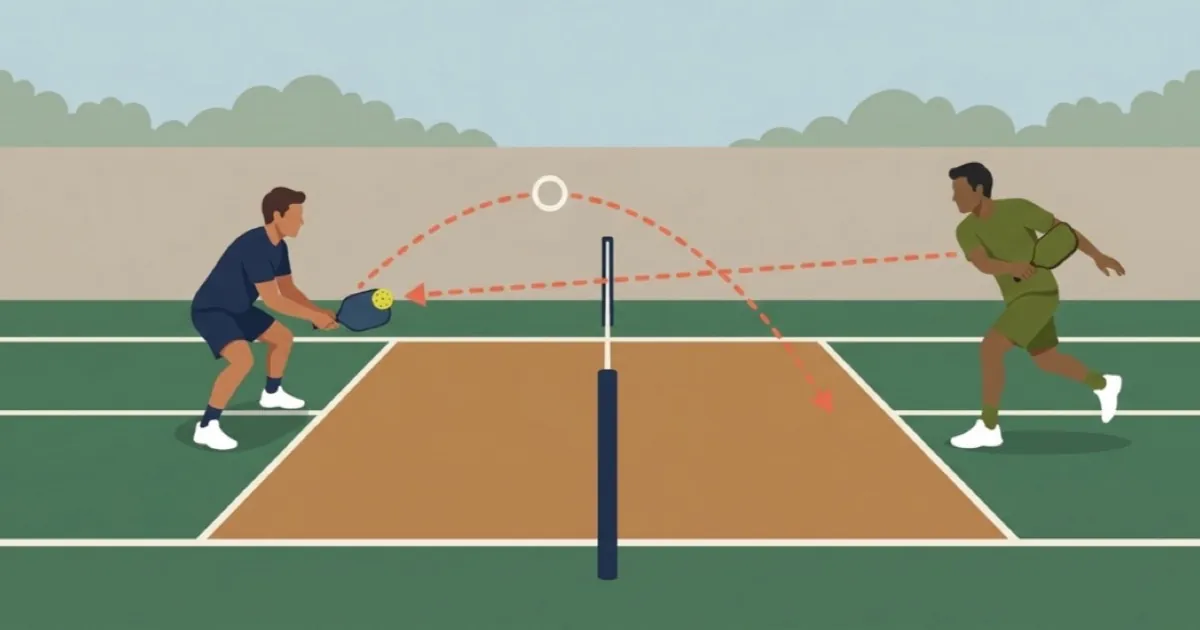
Every pickleball player has faced one. The opponent who hits every ball as hard as they can, every single time. Drives off the serve return. Drives off the third shot. Smashes anything above the net. No dinks, no drops, no finesse. Just raw power on every swing.
That player is a banger.
Bangers are common in recreational and lower-intermediate play, and they can be incredibly frustrating to play against. Their hard-hitting style can feel overwhelming, and many players simply do not know how to respond. But here is the reality: banging is a limited strategy, and once you understand how to counter it, you will welcome the matchup.
Why Banging Works at Lower Levels
Before we talk about how to beat bangers, it helps to understand why their style is effective against certain players.
Banging works when:
- Opponents cannot block or reset. If you cannot absorb pace and return the ball softly, every hard shot puts you on the defensive.
- Opponents panic under pressure. Fast balls create fast decisions. Players who are not comfortable with pace make rushed, poor choices.
- Points are short. Bangers thrive in quick exchanges. They do not want to play long rallies because their strategy lacks the nuance to construct points.
- The competition has not developed a soft game. If nobody on the court can dink or drop effectively, the hardest hitter often wins.
The takeaway: banging exploits weaknesses in fundamentals. Fix those fundamentals and the banger’s advantage disappears.
Strategy 1: The Soft Game Is Your Best Weapon
The single most effective counter to a banger is the soft game. Drops, dinks, and resets take pace away and force the banger to generate their own power rather than using yours against you.
When a banger drives the ball at you:
- Do not drive it back. This is exactly what the banger wants. A hard ball coming back gives them another chance to swing big.
- Reset the ball into the kitchen. Use a soft block to drop the ball over the net and into the non-volley zone. This forces the banger to either let it bounce and hit up, or rush forward to play a shot they are uncomfortable with.
- Be patient. The banger will keep trying to speed things up. Your job is to keep taking pace off the ball until they make an error or give you an attackable ball.
This approach requires good dinking skills, but it does not need to be perfect. You just need to be more comfortable with soft shots than the banger is.
Strategy 2: Master the Reset
The reset is the specific shot that neutralizes a banger’s power. It is a soft, controlled block that absorbs the energy of a hard shot and returns a low, slow ball to the kitchen.
How to Hit a Reset
- Loosen your grip. A tight grip bounces the ball off your paddle with force. Hold the paddle at a 3 out of 10 on the grip pressure scale.
- Angle the paddle face open. Tilt the paddle slightly upward to redirect the ball up and over the net softly.
- Minimal backswing. Do not try to swing at the ball. Just present the paddle face and let the incoming ball do the work.
- Absorb with your body. Slightly pull your paddle back on contact, like catching an egg. This deadens the ball and takes pace off.
- Aim for the middle of the kitchen. You do not need a perfect placement. Just get the ball low and over the net.
Reset Drill
Have a partner stand at the kitchen line and drive balls at you while you stand at mid-court or the baseline. Your only job is to reset each ball into the kitchen. Start with slower drives and gradually increase the pace as your reset improves. This one drill will transform your ability to handle bangers.
Strategy 3: Positioning Matters
Where you stand on the court directly affects how well you can handle a banger’s power.
Get to the Kitchen Line
This might seem counterintuitive because the banger is hitting hard and you might feel safer further back. But standing at the kitchen line is actually the best position against a banger for several reasons:
- Less time means less pace. When you are at the kitchen line, the ball reaches you before it has time to accelerate and dip. You are essentially catching it early.
- Better angles for resets. From the kitchen line, you can redirect the ball down into the kitchen with a simple block.
- Pressure on the banger. A ball hit hard at someone standing at the kitchen line often goes into the net or pops up.
If You Must Stay Back
Sometimes the banger keeps you pinned at the baseline. When that happens:
- Stand a step behind the baseline. This gives you extra reaction time.
- Keep your paddle up and in front of you. The ready position is essential against power players.
- Focus on deep, soft returns. Hit the ball deep to keep the banger back, then look for an opportunity to move forward with a third shot drop.
Strategy 4: Use the Banger’s Pace Against Them
Hard shots are easier to redirect than to generate. When a banger drives the ball at you, you do not need to swing hard to send it back deep. A well-angled block can use the banger’s own pace to redirect the ball exactly where you want it.
This works particularly well for:
- Block volleys at the kitchen line. Angle your paddle and let the banger’s power send the ball sharply crosscourt or at their feet.
- Punch volleys. A short, compact punch volley using the incoming pace can catch the banger off guard, especially when directed at their non-paddle hip.
- Angled blocks. If the banger drives crosscourt, a block that redirects down the line can be very effective because the banger is usually not expecting the direction change.
Strategy 5: Target Their Weaknesses
Bangers typically have predictable weaknesses. Exploit these consistently.
Their Soft Game Is Usually Weak
Most bangers do not practice dinks, drops, or touch shots. When you force them into the soft game, they are out of their comfort zone. Drop the ball into the kitchen and make them try to dink. Many bangers will pop the ball up or try to drive a ball that should be dinked, giving you an easy putaway.
Their Footwork Is Often Limited
Bangers tend to plant their feet and swing from a stationary position. Move them laterally with angled shots and watch how much less effective their power becomes when they are reaching or off balance.
They May Lack Patience
Bangers want to end points quickly. If you extend rallies, they often get frustrated and try to hit bigger and bigger shots. The bigger they swing, the more errors they make. Stay patient and let them self-destruct.
Strategy 6: Block Volleys
The block volley is your defensive workhorse against a banger. It is not a swing. It is a controlled redirect.
How to execute:
- Hold your paddle in front of you at chest to shoulder height.
- Absorb the ball by keeping a relaxed grip and letting the paddle give slightly on contact.
- Angle the paddle to direct the ball where you want it, preferably low and toward the kitchen.
- Keep your feet stable. A wide, balanced stance lets you react to balls on either side.
Practice block volleys until they feel natural. When you can consistently block a hard drive and redirect it softly, you have neutralized the banger’s primary weapon.
The Mental Game Against Bangers
Playing against a banger can be mentally draining if you let it. Here is how to stay sharp:
- Do not get emotional. A ball slammed at your face is not personal. Stay calm and reset.
- Trust your strategy. The soft game beats banging over a full game. You might lose a few quick points early, but consistency wins.
- Celebrate your resets. Every successful reset is a small victory. It tells the banger that their power is not working.
- Do not try to out-bang the banger. This is their game, not yours. Play your game.
Putting It Into Practice
The next time you face a banger, remember this simple framework:
- Reset their drives into the kitchen
- Get to the kitchen line as quickly as possible
- Dink patiently and wait for the banger to make an error
- Attack only when the ball is above the net
- Stay calm and trust the process
It takes practice to become comfortable absorbing power and playing soft against aggression. But once you can do it, bangers become some of the most satisfying opponents to play against. For more on developing the all-around game you need, check out our 10 tips to improve your pickleball game.
Struggling with a specific type of opponent? Coach Pickle’s AI coaches can analyze the matchups that give you trouble, suggest tactical adjustments, and walk you through drills designed to build the reset and soft game skills that neutralize power players.
Want Personalized Coaching?
Coach Pickle gives you an AI pickleball coach in your browser or on your phone. Get strategy advice, drills, and mental game coaching tailored to your skill level.