Pickleball lobs: create space and defend the high ball
Learn offensive and defensive lob choices, an underhand lifting motion, depth targets, and safe recovery when opponents lob you.
By Coach Pickle coaching team · Last updated
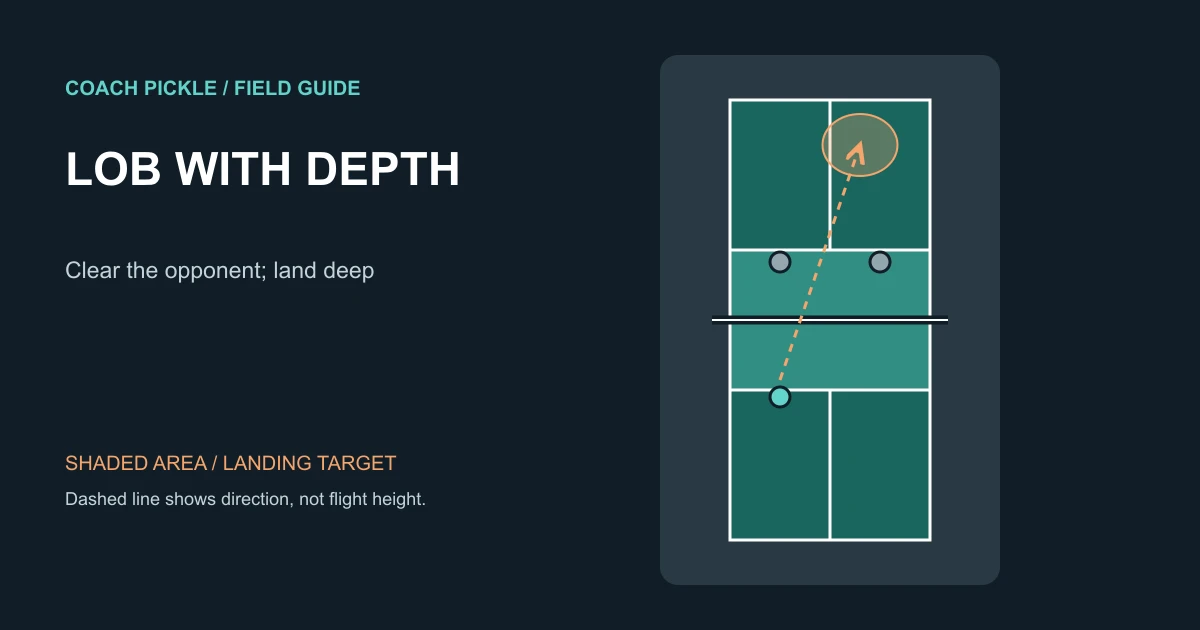
What a lob can change
A lob sends the ball high over an opponent, usually to move them away from the kitchen or buy recovery time. An offensive lob tries to surprise a forward opponent and land deep. A defensive lob gives you time when the rally has pulled you out of position.
Neither is automatically a good escape. A short lob gives the opponent an overhead. A lob into strong wind may hold up; one with the wind may sail long. Choose the shot because the available space and your contact support it, not because the rally feels uncomfortable.
Look for the right opportunity
At the kitchen, an opponent leaning forward and expecting a dink may be vulnerable. A balanced contact on a manageable ball gives you a better chance to lift with depth. If you are reaching or the incoming ball is very fast, disguising an accurate lob becomes much harder.
An opponent already standing well back may not need to move at all to handle your lob. Against a player with a comfortable overhead, depth and placement are especially important. Sometimes a low dink or reset is the more reliable way to relieve pressure.
Lift from below the ball
An ordinary lob is an underhand lift, typically contacted below the belly button. Prepare a compact motion similar to your soft shot, open the face as needed, and guide the paddle upward through contact with controlled support from the legs.
The lobbing player is not making an overhead swing. An overhead is the defender’s possible response to a lob. Keeping these actions distinct helps you practice the right mechanics.
Avoid an abrupt wrist scoop. It can produce plenty of height but unpredictable depth. Start with a smooth motion and a broad deep target. As control improves, make the early preparation resemble your dink without sacrificing stable contact just to hide the shot.
Height and depth work together
The ball needs enough height to clear the opponent’s comfortable reach and enough depth to make them retreat. Height alone can give them more time to organize an overhead if it lands short. Depth without sufficient clearance can be intercepted.
Aim inside the baseline and sidelines rather than trying to land directly on a line. Adjust for the opponent’s position, reach, and conditions. A crosscourt lob offers more flight distance, but you still need to consider what happens if the opponent reaches it and attacks toward your partner.
Recover after your lob
Watch the opponent’s response. If they turn and chase a deep ball, your team may gain a chance to organize or hold the kitchen. If they plant underneath a short lob, prepare for an overhead and defend from a position with enough reaction time.
Do not admire the shot. Tell your partner if you see the lob falling short. Both players should prepare for the next contact rather than one advancing while the other backs away without communication.
Defend with a turn and a plan
When you recognize a lob, decide early who will take it. If it is a comfortable overhead, turn sideways, track the ball, and strike from balance. Control placement before attempting maximum power. A high ball does not require a winner attempt.
If it travels beyond a manageable overhead, turn and run rather than backpedaling. Let it bounce when that gives you a better contact. Communicate a switch if your partner is better placed to chase, then cover the court they leave. The return may be a drop, reset, or defensive lob depending on your balance.
Common lob mistakes
Short and attackable: the stroke may be producing vertical lift without enough forward distance. Practice depth from an easy feed before adding disguise.
Long: reduce the motion and account for wind. Keep a target inside the baseline.
Predictable: you may be changing your setup too early. Build consistency before trying to make the lob look like a dink.
Late defensive chase: watch the opponent’s face and trajectory sooner, then turn promptly instead of waiting underneath the ball.
Practice both sides of the tactic
From the kitchen, ask a partner to feed gentle dinks. Hit ten lobs toward a large deep target while they judge whether the ball cleared their comfortable overhead reach. Count depth and clearance separately.
Then alternate dinks and lobs from similar preparation. Your partner should react naturally rather than knowing which ball is coming. Finally, switch roles and rehearse turn-and-chase recovery at controlled pace. A lob session should teach both the lift and the response it creates.
Frequently asked questions
What is a lob in pickleball?
How do you hit a pickleball lob?
When should you lob in pickleball?
How do you defend a lob in pickleball?
Practice lobs with Coach Pickle
Download Coach Pickle for lob practice ideas and personalized advice on when to lift the ball, stay in the soft game, or defend an opponent’s lob.